Soft or sagging floors are one of the most common structural problems homeowners experience in manufactured and mobile homes throughout Florida. Many homeowners first notice the issue when the floor begins to feel spongy underfoot, especially in hallways, kitchens, or near entry doors.
While the problem may appear suddenly, the damage usually develops slowly over time. Florida’s humid climate creates conditions where moisture can build up beneath a mobile home if the vapor barrier becomes damaged or deteriorates. When this happens, moisture can begin affecting the insulation, floor joists, and subfloor structure.
Homeowners in cities like Tampa, Clearwater, Largo, Lakeland, Bradenton, Sarasota, Fort Myers, and Orlando frequently discover soft floors long before they realize the underlying cause is moisture entering the crawlspace beneath the home.
Understanding how mobile home floor repair works helps homeowners recognize the early warning signs of moisture damage before the problem becomes severe. Soft or sagging areas in the floor often indicate that the subfloor or floor joists beneath the home have been weakened by moisture over time. When homeowners understand the repair process and the causes behind these issues, they are better able to take action quickly.
Why Mobile Home Floors Become Soft
Most soft floors in mobile homes are caused by moisture-related damage beneath the home. When moisture enters the crawlspace, it can slowly weaken the wood structure that supports the flooring.
Several factors contribute to this problem.
Damaged Vapor Barriers
A vapor barrier is a heavy plastic liner installed beneath a mobile home to block ground moisture from rising into the structure. When the barrier becomes torn, loose, or deteriorated, moisture from the soil can reach the insulation and wooden floor structure.
Over time this can lead to soft spots in the flooring and structural weakening of the subfloor.
Florida’s Humid Environment
Florida’s climate creates constant moisture pressure beneath homes. High humidity levels, heavy rainfall, and warm temperatures create conditions where moisture can accumulate beneath the home if the crawlspace is not properly protected.
Homes located in coastal cities like Clearwater, Tampa, and Bradenton often experience higher humidity levels that accelerate moisture damage beneath the structure.
Wet Insulation Beneath the Home
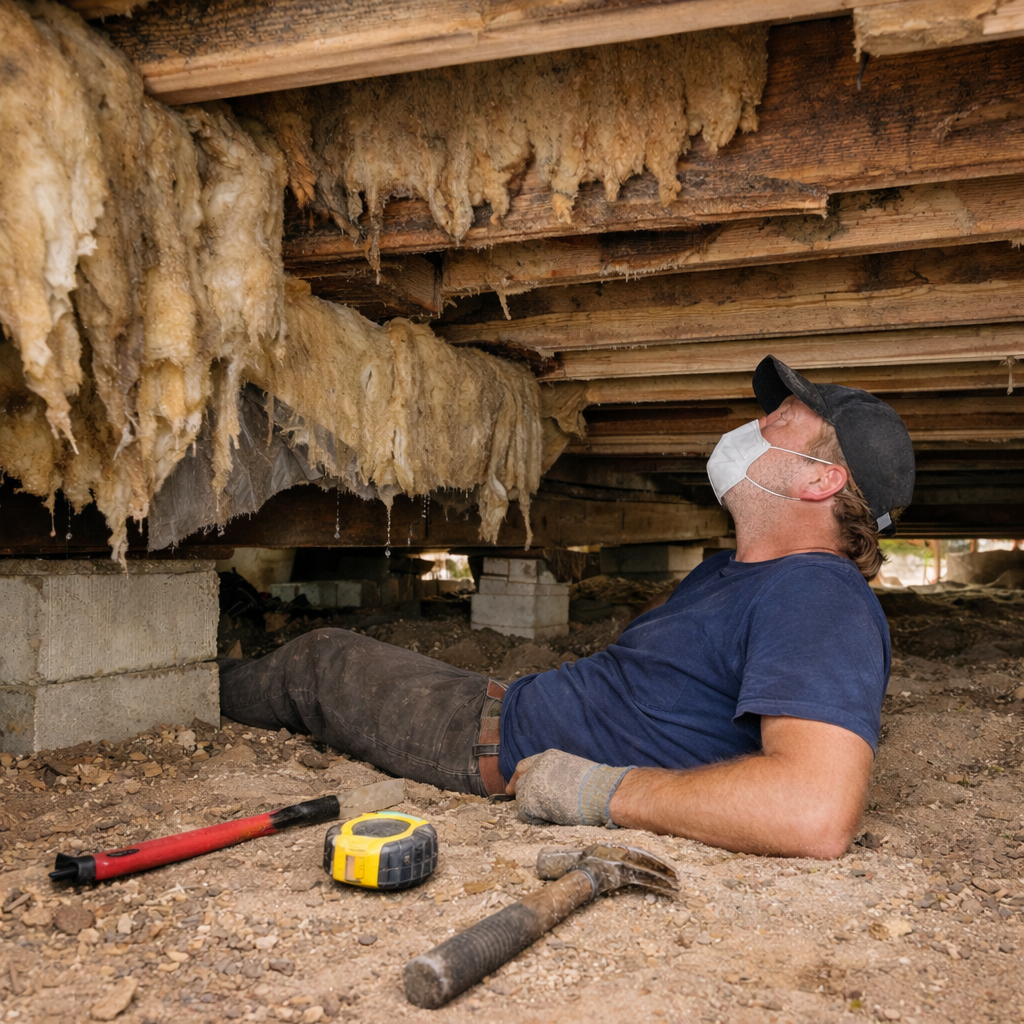
Insulation installed under a mobile home helps regulate temperature inside the structure. However, when insulation becomes wet, it can trap moisture against the subfloor. This can speed up wood rot and deterioration of the flooring structure.
Poor Drainage Around the Home
Water that collects around the perimeter of a home can increase moisture levels beneath the structure. Poor drainage, clogged gutters, or improper grading can allow water to collect beneath the home, creating a damp crawlspace environment.
Signs Your Mobile Home Floor May Need Repair
Soft floor problems often develop gradually. Many homeowners notice early warning signs before the issue becomes severe.
Common signs include:
- soft or spongy areas when walking across the floor
- sagging sections of flooring
- musty odors inside the home
- insulation hanging beneath the home
- visible moisture in the crawlspace
- uneven or shifting flooring
If these warning signs appear, the problem should be inspected as soon as possible to prevent further structural damage.
How Mobile Home Floor Repair Is Performed
Repairing a soft floor in a mobile home involves addressing both the damaged flooring and the moisture problem beneath the home.
A typical mobile home floor repair process includes several steps.
Under-Home Inspection
The first step is a professional inspection beneath the home to identify the source of the moisture and determine the extent of structural damage.
Removing Damaged Materials
Any damaged insulation or deteriorated subfloor material must be removed before structural repairs can begin.
Structural Floor Repair
Damaged sections of the floor structure are repaired or reinforced to restore strength and stability to the flooring system.
Vapor Barrier Replacement
In many cases, installing a new vapor barrier beneath the home is necessary to prevent moisture from returning. A properly installed vapor barrier blocks ground moisture and protects the structural components of the home.
Insulation Replacement
Once the structural repairs are complete, new insulation is installed beneath the home to improve energy efficiency and protect the floor system.
Preventing Soft Floors in Mobile Homes
Preventing moisture beneath the home is the most effective way to protect the floor structure of a mobile home.
Homeowners can reduce the risk of floor damage by:
- maintaining a properly installed vapor barrier
- repairing torn vapor barriers promptly
- ensuring proper drainage around the home
- keeping gutters clean and directing water away from the foundation
- scheduling periodic under-home inspections
These steps help maintain a dry crawlspace environment and protect the structural integrity of the flooring system.
Professional Mobile Home Floor Repair in Florida
Soft floors in a mobile home should never be ignored. What begins as a small soft spot can spread quickly if moisture continues damaging the floor structure.
Professional inspections can identify whether the problem involves the subfloor, floor joists, insulation, or vapor barrier beneath the home.
Homeowners throughout Florida trust
Florida Anchor & Barrier
for mobile home vapor barrier repair, floor repair, tie-downs, and moisture protection services.
Florida Anchor & Barrier provides mobile home vapor barrier repair and floor repair services throughout Florida, including
Frequently Asked Questions
What causes soft floors in a mobile home?
Soft floors are usually caused by moisture damage to the subfloor structure beneath the home. This often occurs when the vapor barrier becomes damaged or deteriorates.
Can soft floors in a mobile home be repaired?
Yes. Most soft floors can be repaired by replacing damaged sections of the subfloor and correcting the moisture problem beneath the home.
Does a vapor barrier help prevent soft floors?
Yes. A properly installed vapor barrier blocks ground moisture from reaching the subfloor and insulation beneath the home.