Mobile Home Vapor Barrier Repair in St. Augustine, FL
Serving Homeowners in St. Augustine, Florida
Mobile Home Vapor Barrier Replacement and Repair in St. Augustine, Florida
St. Augustine mobile homes face heavy moisture exposure because of the city’s coastal climate, frequent rainstorms, and soil that holds dampness beneath the home. When a vapor barrier becomes damaged, moisture rises into the insulation and flooring system, leading to mold, sagging insulation, and soft, uneven floors. Florida Anchor and Barrier specializes in vapor barrier repair and replacement, insulation restoration, floor reinforcement, skirting repair, tie-down and hurricane anchor upgrades, and carport services. As State Certified General Contractors (CGC 004138), homeowners throughout St. Augustine rely on us for moisture protection that stands up to harsh coastal conditions.
What our Customers Say About Us
We Provide Complete Mobile Home Repair Services in St. Augustine, FL
Our Proven 4 Step Mobile Home vapor barrier Repair Process
Step 1 — Free Under-Home Inspection
We check your vapor barrier, insulation, and moisture levels and explain exactly what’s going on under your home.
Step 2 — Clear Diagnosis & Upfront Quote
You’ll know the problem, the solution, and the price — with no surprises.
Step 3 — Professional Installation
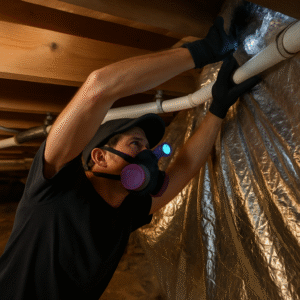
We remove damaged material, seal the underbelly, and install a new vapor barrier built for Florida moisture.
Step 4 — Warranty & Support
Your installation includes a workmanship warranty and ongoing support from a Florida-based team.
Need more than a vapor barrier? We can help.
We repair every part of your mobile home — not just the vapor barrier.
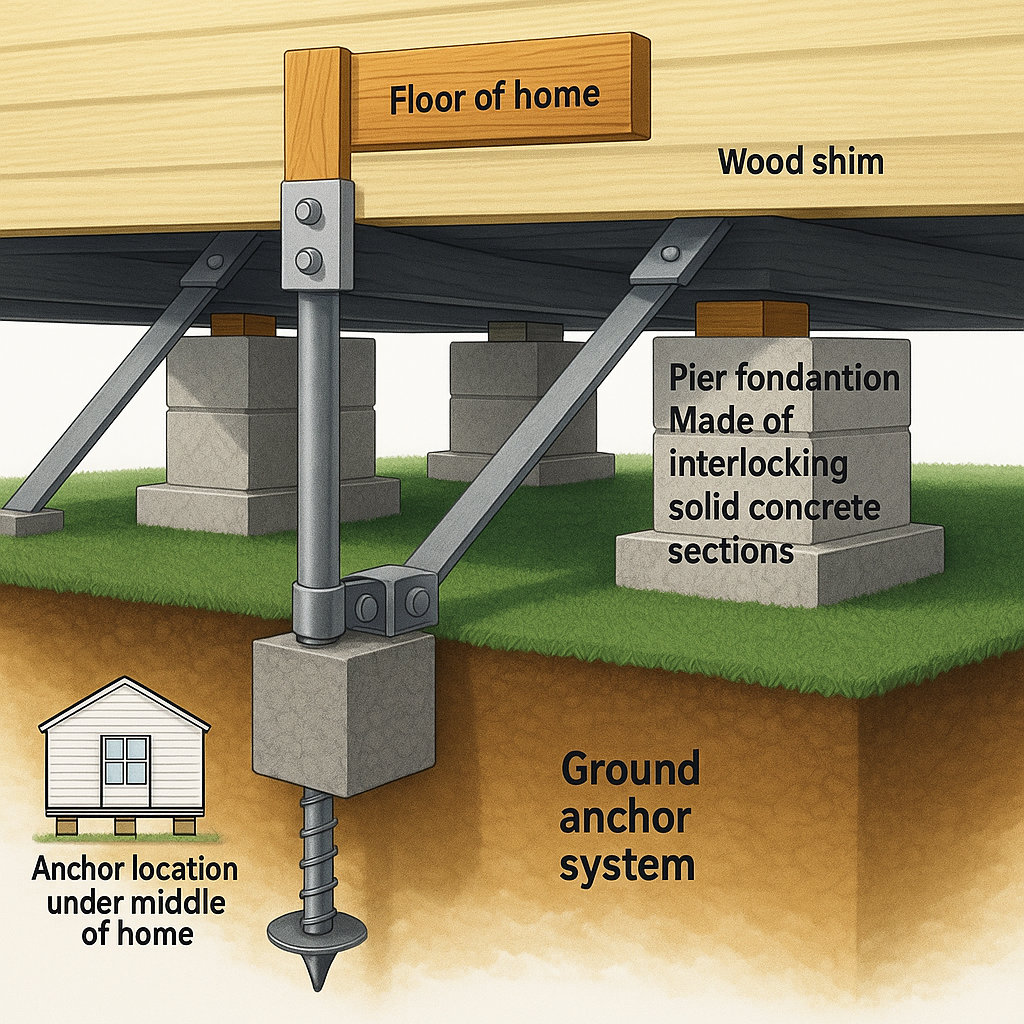
- Hurricane Anchors / Tie Downs
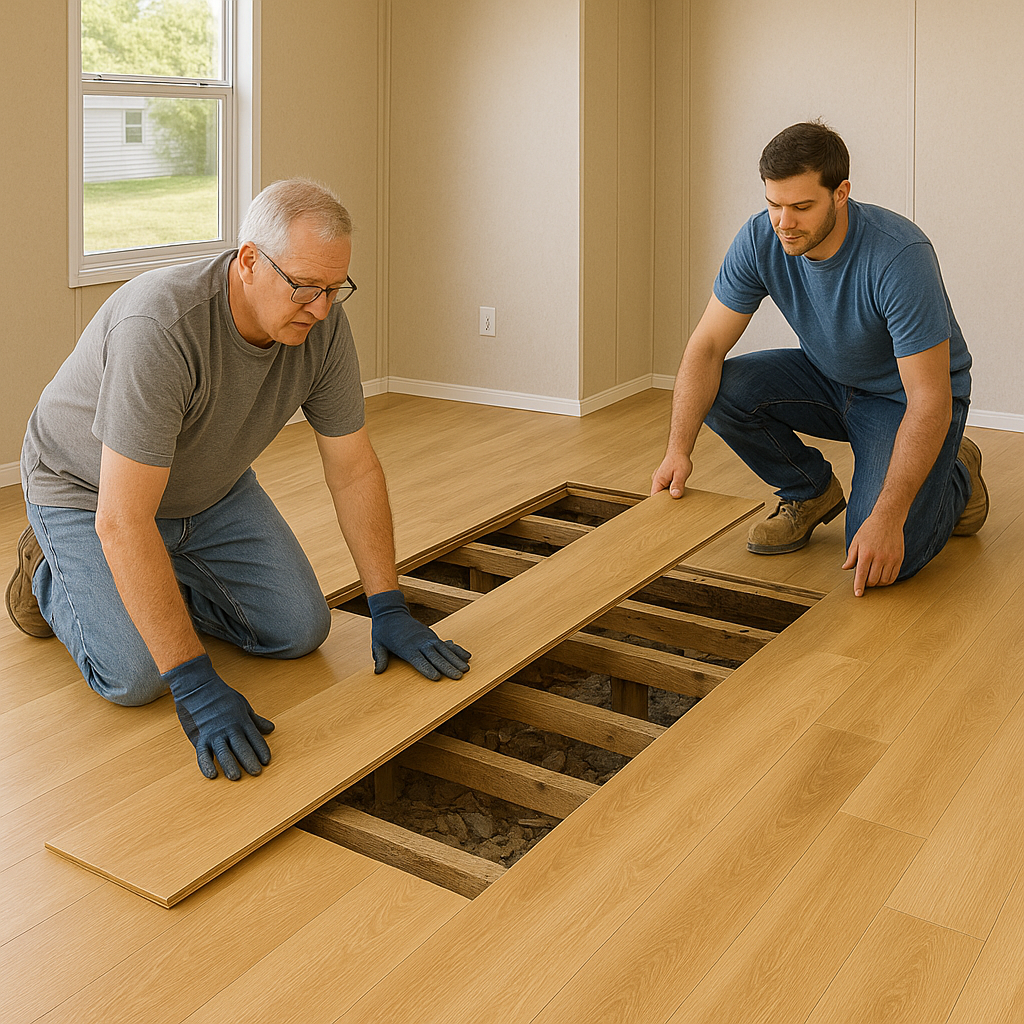
- Mobile Home Flooring Installation
- Mobile Home Siding Installation
- Mobile Home Releveling Experts
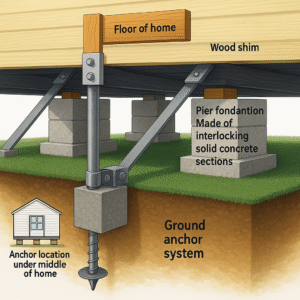
Mobile homes need proper hurricane anchors and tie downs to stay secure during high winds and storms in Florida. A weak or outdated tie-down system can allow shifting, movement, or structural stress that leads to costly damage. Professional installation helps stabilize the home, protect the foundation, and reduce storm risk. Many homeowners search for mobile home hurricane tie-down installation when they start noticing movement or settling — and that’s exactly what we provide.
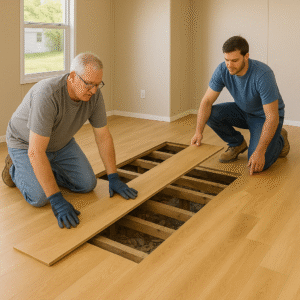
Moisture and underbelly damage often cause soft, sagging, or uneven floors in mobile homes. Installing new flooring helps restore stability, safety, and long-term support inside the home. We remove rotted or damaged materials and replace them with durable options designed for humid Florida conditions. Many people looking for mobile home flooring replacement are dealing with hidden moisture problems — and new floors are often part of the solution.
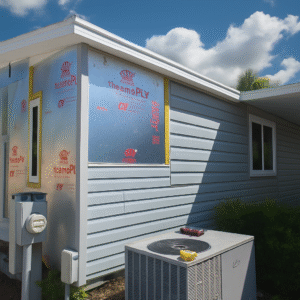
Damaged or aging siding can let water, humidity, and pests into a mobile home, leading to insulation damage and higher energy bills. Installing new siding helps protect the exterior and improve curb appeal while sealing out moisture. We remove loose, warped, or cracked siding and replace it with materials built for Florida heat and storms. Homeowners often search for mobile home siding installation and repair when they notice leaks or exterior damage starting to spread.
Over time, mobile homes can settle or shift, causing gaps, crooked doors, slanted floors, and cracks along the walls. Releveling restores the home to a safe, even position by correcting support issues under the structure. This helps prevent long-term stress and damage to the frame, flooring, and windows. Many homeowners turn to mobile home releveling services when they notice floors dipping or doors no longer closing properly.
- Mobile Home Vapor Barriers
- Mobile Home Sagging Floors Repairs
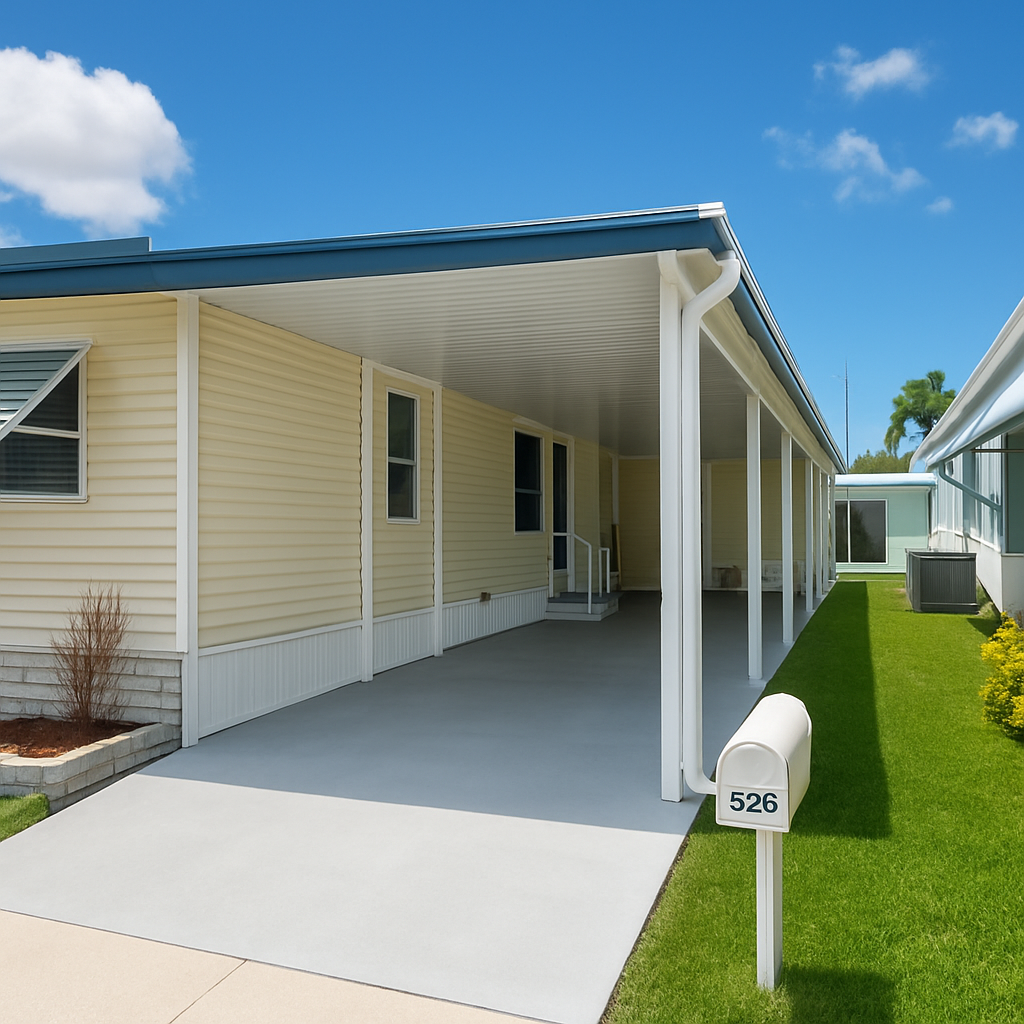
- Mobile Home Carport Contractors
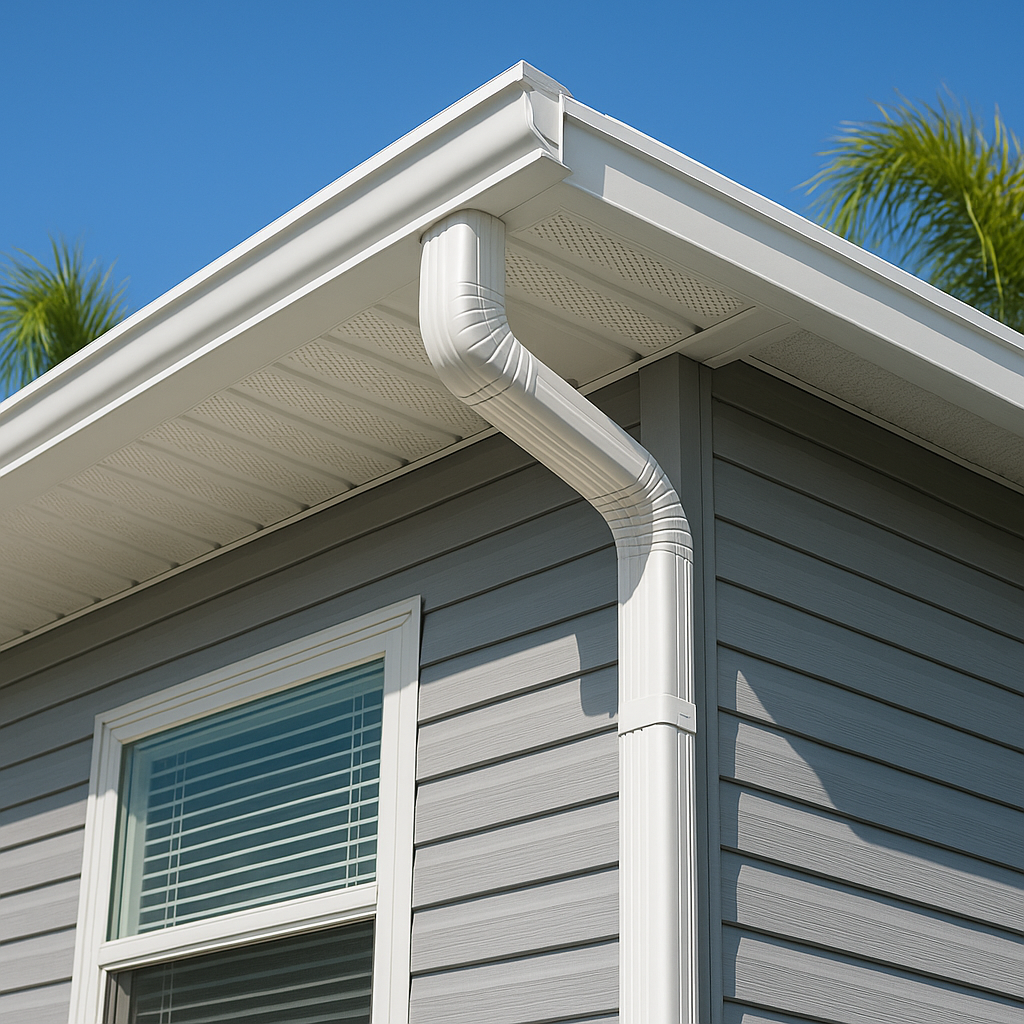
- Mobile Home Gutter Installation
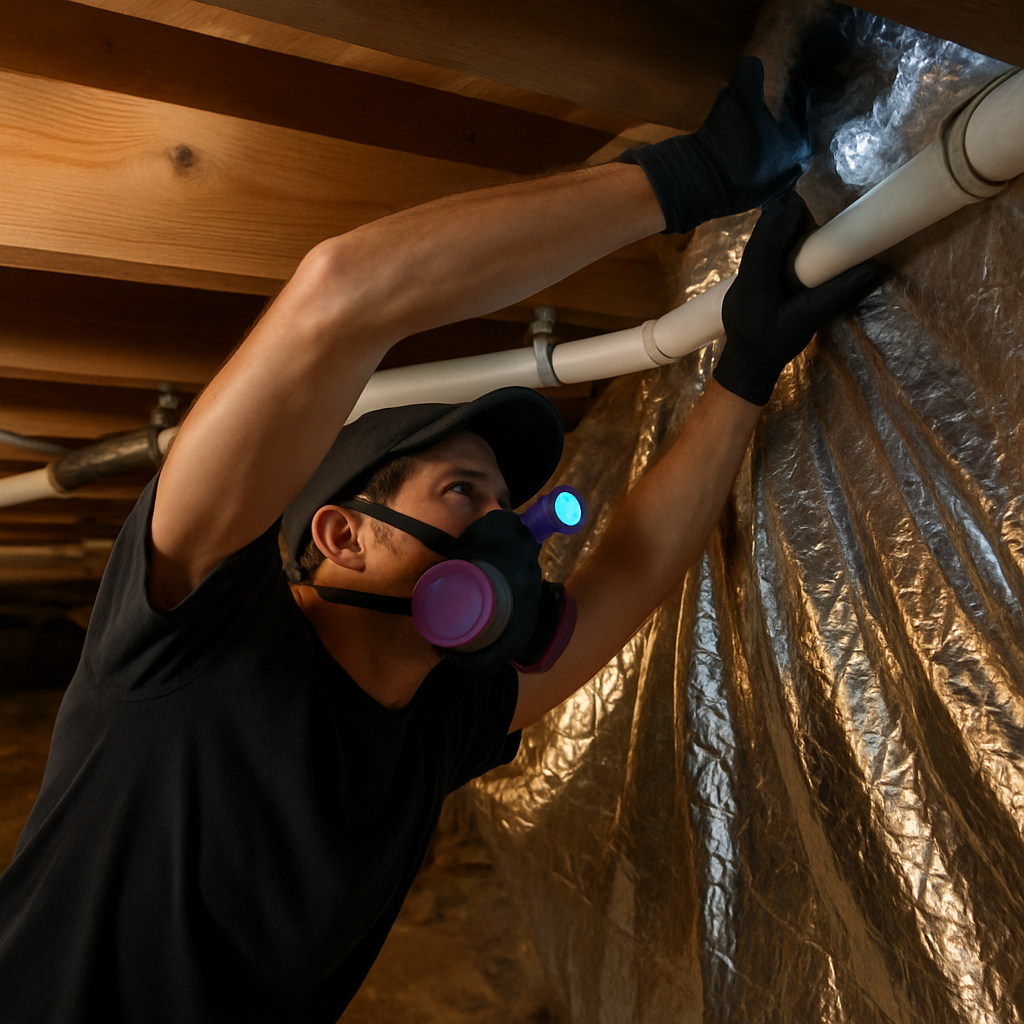
A torn or missing vapor barrier allows ground moisture to rise into the mobile home, leading to mold, soft floors, and insulation failure. Installing a new vapor barrier seals the underbelly and helps protect the structure from humidity and rot. This is one of the most important steps in preventing long-term damage in Florida’s climate. Homeowners researching mobile home vapor barrier replacement are often dealing with moisture, mildew smells, or sagging floors — all signs the barrier has failed.
Soft or sagging floors are a common sign of moisture damage under the home. We repair weakened joists and subflooring, remove damaged wood, and restore safe, solid support. Fixing sagging floors early helps prevent further structural issues and expensive repairs. Many people looking for mobile home sagging floor repair are also facing vapor barrier or underbelly problems — and we can address both.
Carports help protect vehicles, entryways, and outdoor areas from sun, rain, and storm debris. We install and repair mobile home carports built for Florida weather and long-term durability. A new carport can improve convenience, safety, and property value. Homeowners searching for mobile home carport installation or replacement often want better protection during hurricane season or heavy storms.
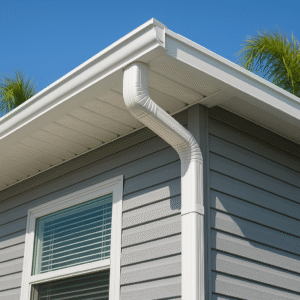
Without proper gutters, rainwater can pool around the home, causing erosion, moisture buildup, and underbelly damage. We install seamless gutter systems that direct water away from the structure to protect the foundation and vapor barrier. This helps reduce long-term maintenance issues and moisture-related repairs. Many homeowners look for mobile home gutter installation when they notice pooling water or moisture collecting under the home.
State Certified General Contractors CGC 004138 • Trusted by Local Homeowners
Why homes in St. Augustine Florida get Moisture Damage
St. Augustine sits along the Atlantic Coast, where ocean humidity, salt air, and storm-driven rain make vapor barrier deterioration more common. Communities such as Sea Breeze Mobile Home Park and Madeira Mobile Home Park frequently deal with torn vapor barriers, wet insulation, and mildew due to the area’s high water table and sandy, moisture-rising soil. Coastal winds carry damp air inland, and the region’s frequent nor’easters and tropical systems push moisture under mobile homes. Our team understands St. Augustine’s challenging coastal environment and provides targeted repairs that stop ongoing moisture intrusion and protect your home’s structural integrity.
1. How does St. Augustine’s marshlands and tidal moisture increase the need for a mobile home vapor barrier?
St. Augustine is surrounded by tidal marshes, creeks, and the Intracoastal Waterway, which keep the soil damp year-round. That moisture rises into mobile home crawlspaces and saturates insulation, ducts, and wooden subfloors. Areas near St. Augustine Shores, Vilano Beach, and the Matanzas River feel this effect the strongest. Without a vapor barrier, mold develops quickly and soft floors become a common issue. A vapor barrier blocks rising moisture and protects the structure from humidity-related deterioration. It also helps your A/C cool the home more efficiently. In St. Augustine’s tide-influenced environment, vapor barriers are essential for long-term protection.
2. Why do mobile home floors in St. Augustine become soft after long humid stretches or stormy seasons?
St. Augustine’s subtropical climate brings long periods of humidity that penetrate the soil beneath mobile homes. Wooden subfloors absorb this moisture and weaken over time, creating soft, spongy areas. Tropical storms and Nor’easters also push moisture under the home, accelerating damage. Mold often forms unseen beneath the flooring, making the problem worse. If not repaired, floors can sag or break through. Our floor repair services address the humidity-driven damage common in St. Augustine neighborhoods.
3. How does a carport protect vehicles and outdoor gear from St. Augustine’s sun, salt air, and coastal winds?
St. Augustine receives powerful sun exposure, and ocean breezes carry salt inland from the Atlantic. Vehicles, tools, and metal equipment wear down quickly under these conditions. A carport shields items from UV radiation, rust, fading paint, and extreme heat buildup. It also protects outdoor belongings during sudden rain bands and wind gusts common near the coast. Many homeowners also use carports as shaded workspaces or storage for fishing gear. Our carports are designed for St. Augustine’s sun-salt-wind environment.
4. How do gutters help mobile homes handle St. Augustine’s heavy rain and poor-draining marsh areas?
Storms in St. Augustine often produce fast, heavy downpours that overwhelm drainage systems. Marshy areas keep the soil moist for long periods, increasing crawlspace humidity. Without gutters, rain runs directly under the home and saturates the foundation soil. This leads to mold, structural erosion, and settling issues. Gutters redirect water away from the home and protect both the foundation and skirting. Our systems are engineered for St. Augustine’s frequent and intense rain cycles.
5. Why are hurricane tie-downs critical for mobile homes in St. Augustine’s storm-exposed coastal zone?
St. Augustine is vulnerable to hurricanes and strong Nor’easter winds that move across the Atlantic. Mobile homes without proper anchors can shift, tilt, or lift during severe storms. Hurricane tie-downs secure the home’s steel frame deep into the soil and prevent dangerous movement. Anchors also stabilize attached structures like steps, porches, and screened rooms. Florida’s wind-zone requirements are strict in St. Johns County because of coastal exposure. Our tie-down systems help keep St. Augustine mobile homes hurricane-ready.
6. What signs show that shifting St. Augustine soil has caused a mobile home to become unlevel?
St. Augustine sits on sandy, marsh-influenced soil that shifts after storms or prolonged wet conditions. Homeowners may notice doors that don’t latch, windows that stick, or floors that slope slightly. Cracks may appear where ceilings meet walls or along trim. Furniture may lean or feel unstable even on flat surfaces. These are early signals that the support piers have settled unevenly. Our releveling service corrects these issues and restores structural balance.
7. How does St. Augustine’s humid coastal climate affect mobile home siding over time?
Coastal humidity and salty air encourage rapid algae, mildew, and salt staining on siding. Homes near Vilano Beach, Anastasia Island, and the Intracoastal often experience exterior buildup faster. Older siding materials can absorb moisture, which causes warping and hidden structural decay. Constant sun exposure also fades and weakens worn siding panels. Upgrading to moisture- and UV-resistant siding offers long-term protection. Our siding options are ideal for St. Augustine’s humid and salt-exposed environment.
8. How does a vapor barrier help reduce indoor humidity in St. Augustine mobile homes?
Moisture from the ground enters the home and increases indoor humidity levels, especially in summer. High humidity makes rooms feel warmer and forces cooling systems to work harder. A vapor barrier blocks this moisture and helps stabilize indoor conditions. Homeowners often notice cooler temperatures and reduced musty odors. It also protects ductwork and insulation from condensation and mold. Our vapor barriers are designed to handle St. Augustine’s high humidity levels.
9. What flooring issues occur when St. Augustine alternates between coastal heat and sudden storm systems?
Subfloors expand in the heat and contract when exposed to moisture, creating structural stress. This results in dips, squeaks, soft spots, and bubbling underneath vinyl or laminate flooring. Storm surges and long rain periods make these issues worse as moisture lingers beneath the home. Mold forms quickly in warm, damp conditions and spreads under the flooring. If ignored, the damage becomes widespread. Our floor repair services address these climate-driven issues.
10. Why do St. Augustine homeowners install carports to protect recreational gear and seasonal equipment?
Residents often store fishing gear, bikes, paddleboards, beach items, and kayaks at home. Sun exposure and humidity degrade these items quickly, especially near the coast. A carport provides shade, ventilation, and protection against sudden storms. It also helps prevent salt-related corrosion on metal equipment. Many homeowners use carports as multipurpose outdoor storage spaces. Our carports support St. Augustine’s outdoor lifestyle.
11. How do gutters help reduce crawlspace moisture in St. Augustine neighborhoods near the Intracoastal or marshlands?
Homes close to marshes or waterways have higher moisture levels year-round. Without gutters, rainfall flows under the home and adds to the humidity already present in the soil. This creates a perfect environment for mold and rot. Gutters channel water away and help maintain dry soil around the support piers. They also protect skirting from long-term water damage. Our gutter systems are built for St. Augustine’s wet coastal environment.
12. How do hurricane tie-downs protect mobile homes from wind surges traveling across the Atlantic toward St. Augustine?
Wind gusts often strengthen as they travel across open water before hitting the coastline. Tie-downs keep the home anchored and reduce risks of shifting or lifting. This helps protect walls, roofing, and the home’s connection points. Anchors also stabilize attached structures that could otherwise strain the main frame. Regular inspections ensure anchors remain tensioned and corrosion-free. Our anchor systems are designed for St. Augustine’s coastal storm exposure.
13. Why do mobile homes in St. Augustine settle even in professionally developed communities?
Even prepared pads experience settling due to St. Augustine’s sandy soil and fluctuating moisture patterns. Heavy rains soften the ground while dry spells cause contraction, leading to uneven settling. Floors may tilt, cabinets may shift, or cracks may form along interior walls. Releveling restores proper alignment and prevents long-term frame damage. It also helps windows and doors open smoothly again. Our releveling services match the soil conditions common across St. Augustine.
14. Why does siding in St. Augustine accumulate algae and mildew faster than many other areas?
St. Augustine’s warm, salty air encourages algae and mildew to grow rapidly on shaded or north-facing siding. Salt particles cling to exterior surfaces and attract moisture. Older siding lacks the protective coatings of newer materials and deteriorates more quickly. Constant humidity also softens aging panels. Upgraded siding helps prevent moisture penetration and reduces staining. Our siding installations are selected to handle St. Augustine’s coastal climate.
15. How does a vapor barrier improve cooling efficiency inside St. Augustine mobile homes?
High humidity from the ground makes the A/C work harder to cool the home. Moisture entering from the crawlspace forces the system to remove humidity before lowering the temperature. A vapor barrier stops this moisture and helps maintain stable indoor conditions. It also reduces condensation on ductwork and insulation. Many homeowners notice more consistent cooling and better energy efficiency. Vapor barriers are ideal for St. Augustine’s long, humid summers.
16. What flooring issues happen when St. Augustine experiences rapid temperature and moisture fluctuations?
Heat expands wood materials, while sudden moisture causes contraction and weakens the subfloor. This results in loose flooring, squeaks, and soft areas across the home. Vinyl or laminate may bubble or lift as moisture builds underneath. Mold grows quickly in these warm, damp environments. If left untreated, the damage can become structural. Our floor repairs address St. Augustine’s fluctuating heat-and-storm conditions.
17. Why do St. Augustine residents add carports to protect patio furniture, tools, and outdoor storage?
Outdoor belongings degrade quickly in St. Augustine’s humid, salty environment. A carport shields items from UV rays, ocean air, and sudden rain bands. It also reduces rust, mold, and fading on lawn equipment and furniture. Homeowners appreciate having a covered area for tools, bikes, or seasonal storage. Carports extend the lifespan of outdoor items significantly. Our designs are built for coastal Florida conditions.
18. How do gutters help maintain soil stability under mobile homes in St. Augustine?
Heavy rainfall and marshy ground wash away supporting soil around mobile home piers. Gutters direct water away from vulnerable areas and prevent erosion under the home. This helps maintain a level foundation and reduces structural stress. Gutters also help protect siding and skirting. Keeping the soil dry is vital for long-term stability. Our gutter systems support St. Augustine’s often-wet terrain.
19. What signs suggest hurricane anchors may need inspection in St. Augustine mobile homes?
Rusty hardware, loose straps, or visible shifting during windy days are common warning signs. Coastal moisture causes anchors to corrode faster than inland areas. Soil movement after storms may reduce anchor tension. Having the system inspected before hurricane season ensures safety. Fixing small issues early prevents major problems later. Our anchor inspections help St. Augustine homeowners stay storm-ready.
20. How does releveling extend the lifespan of a mobile home in St. Augustine’s coastal soil environment?
Releveling corrects uneven settling caused by sandy soil, humidity, and storm activity. A level home experiences less strain on its structural components. It also prevents cracks, gaps, and misaligned doors or windows. Proper leveling improves energy efficiency by restoring tight seals around openings. Because St. Augustine’s soil moves often, periodic releveling is crucial. Our releveling services help maintain long-term structural stability.
Contact Florida Anchor and Barrier today to ensure your mobile home is protected with a quality vapor barrier.
Florida Anchor And Barrier
Call to find out if we service your city!
800.681.3772
Service Zone: Altamonte Springs, Apollo Beach, Arcadia, Belleview, Bradenton, Brooksville, Cape Coral, Clearwater, Clermont, Coral Springs, Crystal River, Dade City, Daytona Beach, Deland, Deltona, Dunedin, Englewood, Ellenton, Eustis, Fort Lauderdale, Fort Myers, Fruitville, Hialeah, Hollywood, Homosassa, Inverness, Kissimmee, Lakeland, Largo, Leesburg, Lakewood Ranch, Longboat Key, North Port, New Port Richey, Ocala, Oldsmar, Orlando, Palm Harbor, Palmetto, Parrish, Pinellas Park, Plant City, Port Charlotte, Port St. Lucie, Punta Gorda, Riverview, Ruskin, Safety Harbor, Sanford, Sarasota, Sebastian, Seminole, St. Augustine, St. Cloud, St. Petersburg, Tavares, Tampa, Tarpon Springs, Venice, Winter Haven, Winter Park, Zephyrhills
HEAD OFFICE: 11590 US Hwy 19 N Clearwater, FL 33764