Mobile Home Underbelly Repair & Replacement in Florida
Fix damaged underbelly, insulation, and moisture issues beneath your mobile home
Don’t Let a Damaged Mobile Home Underbelly Cause Bigger Problems
- Cold or damp air entering the home through torn belly board material
- Soft or sagging floors caused by damaged insulation and moisture buildup
- Rodents and pests nesting inside the exposed insulation beneath the home
- Wet, falling insulation when the underbelly fabric tears or collapses
- Higher heating and cooling costs from missing or damaged insulation
- Structural damage to floor joists and steel beams from long-term moisture exposure
Our Proven 4 Step Mobile Home Underbelly Repair Process
Step 1 — Free Under-Home Inspection
We check your vapor barrier, insulation, and moisture levels and explain exactly what’s going on under your home.
Step 2 — Clear Diagnosis & Upfront Quote
You’ll know the problem, the solution, and the price — with no surprises.
Step 3 — Professional Installation
We remove damaged material, seal the underbelly, and install a new vapor barrier built for Florida moisture.
Step 4 — Warranty & Support
Your installation includes a workmanship warranty and ongoing support from a Florida-based team.
Underbelly Repair in Florida
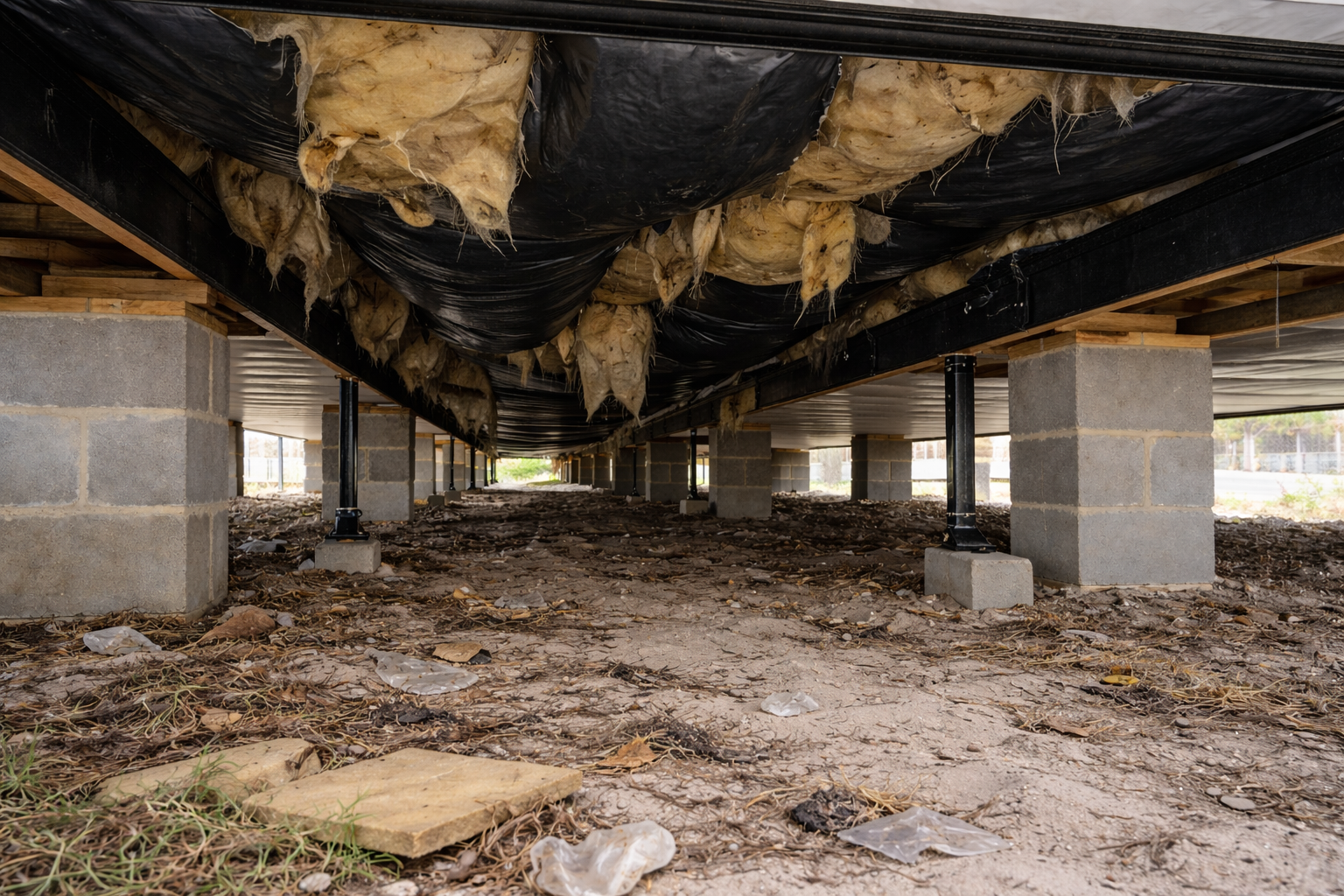
Before
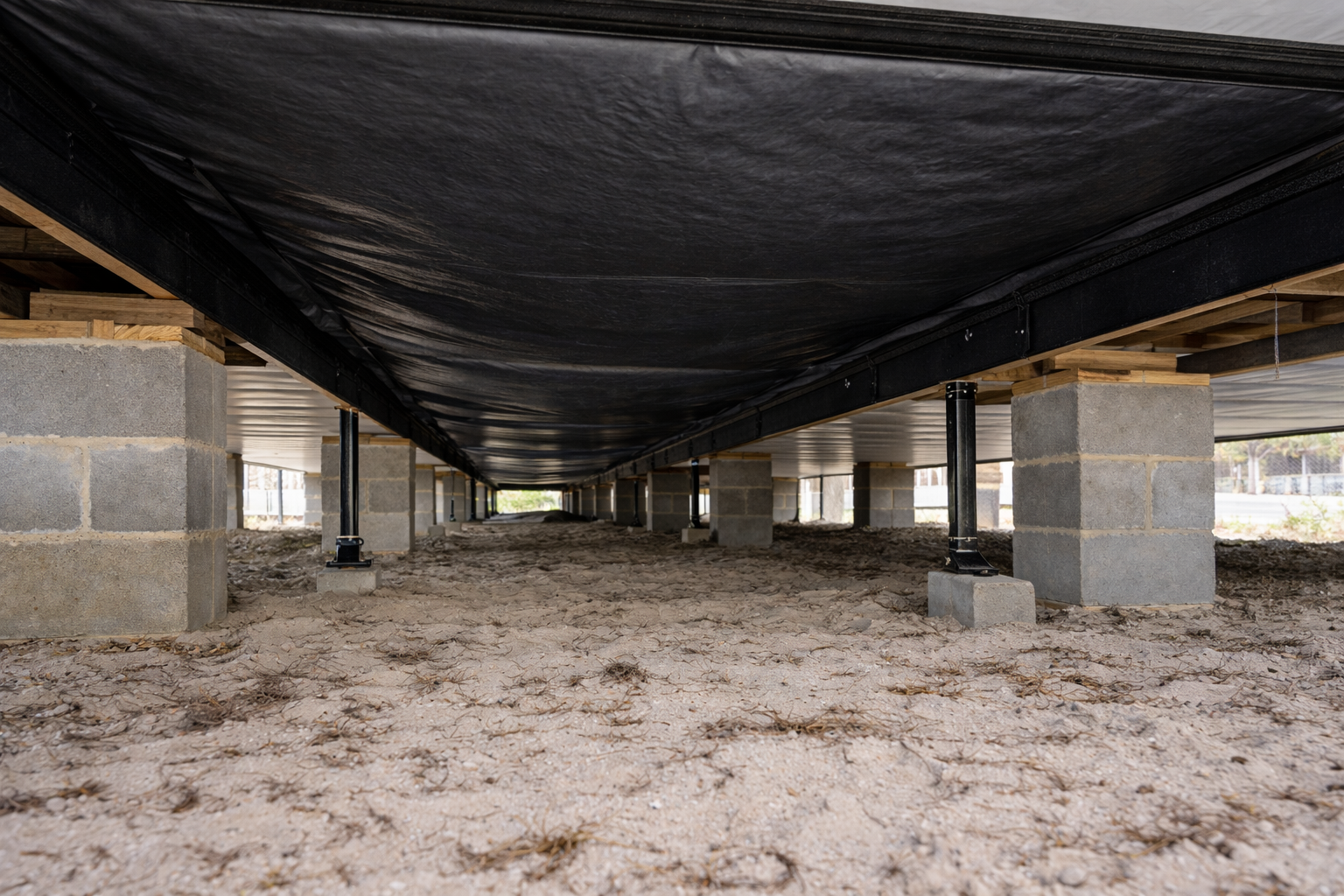
After
Repairing the Underbelly of a mobile home helps:
- Protect insulation beneath the home
- Prevent moisture damage to the subfloor
- Reduce pest entry points
- Improve energy efficiency
- Maintain proper crawlspace conditions
- Extend the life of the mobile home
- Why Choose Florida Anchor and Barrier?
- Frequently Asked Questions about Underbelly Replacement
Florida Anchor & Barrier is one of the few companies in this industry led by a State Certified General Contractor (License CGC 004138). That means every repair — vapor barriers, anchors, leveling, flooring, carports, gutters, and under-home work — is completed to strict Florida building standards. Homeowners trust us because we don’t cut corners, we document every job, and we solve moisture, stability, and structural problems the right way the first time. When you hire us, you’re getting licensed, insured, code-compliant workmanship backed by decades of Florida experience.
1. What is the underbelly on a mobile home?
The underbelly on a mobile home is the protective material installed underneath the structure that helps hold insulation in place and protect the floor system. This material is often called a belly board and is designed to seal the underside of the home. It protects plumbing lines, insulation, and floor joists from moisture, pests, and debris. Without a properly installed underbelly, moisture from the ground can easily enter the crawlspace beneath the home. In humid climates like Florida, this can lead to mold growth and structural damage over time. A damaged underbelly can also allow animals to enter and nest beneath the home. Keeping the mobile home underbelly intact is essential for protecting the structural health of the home.
2. Why is the underbelly important on a manufactured home?
The underbelly on a manufactured home plays a critical role in protecting the insulation and structural components underneath the house. It acts as a protective barrier that keeps ground moisture from reaching the flooring system. When the underbelly is intact, it helps maintain proper insulation and energy efficiency. If it becomes torn or damaged, insulation may fall out and plumbing pipes can become exposed. Over time, moisture exposure can weaken wood floor joists and lead to soft or sagging floors. The underbelly also helps prevent rodents and insects from entering the crawlspace beneath the home. Maintaining the underbelly on a manufactured home helps preserve the long-term condition of the structure.
3. What causes damage to a mobile home underbelly?
Several issues can cause damage to a mobile home underbelly over time. Plumbing leaks are one of the most common causes because water can soak insulation and weaken the belly board material. Animals such as raccoons, rats, or stray cats may also tear open the underbelly while searching for shelter. Storm debris or falling branches can puncture the protective barrier underneath the home. In humid regions, moisture buildup can slowly deteriorate the underbelly material. Poor maintenance or aging materials can also cause sections to sag or tear. Once the protective barrier is compromised, insulation can begin falling out. Regular inspections can help identify underbelly damage before it spreads.
4. How do I know if the underbelly on my manufactured home needs repair?
There are several warning signs that the underbelly on a manufactured home may need repair. Homeowners often notice insulation hanging down from beneath the home. Tears or holes in the belly board material are another clear sign of damage. Soft or sagging floors inside the home can also indicate moisture issues underneath the structure. Increased pest activity around the crawlspace may also signal an opening in the underbelly. You may even notice musty odors inside the home if moisture is trapped beneath it. A professional inspection can quickly determine the condition of the manufactured home underbelly. Repairing small problems early can prevent much larger structural repairs later.
5. Can the underbelly on a mobile home be repaired?
Yes, many sections of a mobile home underbelly can be repaired if the damage is limited. Small tears or holes can often be patched using specialized underbelly repair materials. Insulation that has fallen out can be replaced and secured back into position. Technicians will also check for plumbing leaks that may have caused the original damage. If the surrounding underbelly material is still strong, patching can restore protection underneath the home. However, large areas of damage may require replacing entire sections. A professional inspection will determine whether repair or replacement is the best solution. Addressing problems early helps protect the flooring system of the mobile home.
6. When should a manufactured home underbelly be replaced?
A manufactured home underbelly should be replaced when the damage is widespread or the material has deteriorated significantly. If multiple areas of the belly board are torn or sagging, repairs may no longer be effective. Wet or moldy insulation beneath the home may also indicate a need for replacement. In many cases, older underbelly materials simply wear out after many years of exposure. Replacing the underbelly allows new insulation to be installed and the crawlspace to be sealed properly. This improves both moisture protection and energy efficiency. A full underbelly replacement can restore the structural protection beneath the manufactured home.
7. How long does a mobile home underbelly last?
The underbelly on a mobile home can last many years when properly installed and maintained. In many cases, underbelly materials can last 15 to 25 years depending on environmental conditions. Homes located in humid climates may experience faster deterioration due to moisture exposure. Damage from animals or plumbing leaks can also shorten the lifespan of the underbelly. Regular inspections can help identify small problems before they spread. Keeping the area beneath the home dry can also extend the life of the belly board. Proper maintenance helps ensure the underbelly continues protecting the mobile home structure.
8. What material is used for a manufactured home underbelly?
Most manufactured homes use a durable woven polyethylene or reinforced belly board material for the underbelly. This material is designed to support insulation while creating a protective barrier beneath the home. It is flexible enough to install around floor joists and plumbing lines. High-quality underbelly materials are resistant to tearing and moisture damage. Some systems also include additional vapor barriers to prevent ground moisture from rising into the crawlspace. Proper installation ensures the insulation remains evenly distributed beneath the floor. Using durable materials helps extend the life of the manufactured home underbelly.
9. Can animals damage the underbelly of a mobile home?
Yes, animals are a common cause of damage to a mobile home underbelly. Raccoons, rats, squirrels, and stray cats often try to enter the crawlspace beneath the home. These animals may tear through the underbelly material while searching for shelter or warmth. Once inside, they can damage insulation and plumbing lines. Nesting materials can also block ventilation and trap moisture. Over time, this activity can lead to structural problems and unpleasant odors. Repairing the underbelly quickly helps prevent animals from returning. Sealing openings beneath the home is important for long-term protection.
10. How much does it cost to repair a manufactured home underbelly?
The cost to repair a manufactured home underbelly depends on the size of the damaged area and the condition of the insulation. Small repairs may only involve patching torn sections and reinstalling insulation. Larger repairs may require replacing multiple sections of belly board material. If plumbing leaks or moisture damage are present, those issues must also be addressed. The size of the home and accessibility beneath it can also affect repair costs. Every situation is different, which is why inspections are important. Early repairs are usually much less expensive than waiting until floor damage occurs.
11. Can a damaged underbelly cause soft floors in a mobile home?
Yes, a damaged underbelly can contribute to soft or sagging floors in a mobile home. When the protective barrier underneath the home is torn, moisture can enter the crawlspace. This moisture can affect insulation and eventually reach the wooden floor joists. Over time, repeated exposure to moisture can weaken the flooring system. This may cause areas of the floor to feel spongy or unstable. Repairing the underbelly helps stop moisture from reaching the structural components. Addressing the problem early can prevent expensive floor repairs.
12. Does the underbelly help with insulation in a manufactured home?
Yes, the underbelly of a manufactured home helps hold insulation in place beneath the floor system. The insulation is installed between the floor joists and supported by the belly board material. This helps prevent cold air from entering the home during cooler months. It also helps maintain indoor temperatures and improve energy efficiency. If the underbelly becomes damaged, insulation can fall out or become wet. Wet insulation loses its ability to regulate temperature. Maintaining the underbelly helps keep the manufactured home properly insulated.
13. Can plumbing leaks damage the underbelly on a mobile home?
Plumbing leaks are one of the most common causes of damage to a mobile home underbelly. Water from leaking pipes can soak the insulation and weaken the belly board material. Over time, the underbelly may sag or tear from the weight of wet insulation. Moisture can also lead to mold growth beneath the home. If left untreated, plumbing leaks may eventually affect the floor structure above. Repairing the leak and replacing damaged underbelly sections helps restore protection. Regular inspections can help catch plumbing issues early.
14. Should insulation be replaced when repairing a manufactured home underbelly?
In many cases, insulation should be replaced when repairing a manufactured home underbelly. If the insulation has become wet, compressed, or contaminated by pests, it may no longer provide proper insulation. Wet insulation can also contribute to mold growth and unpleasant odors. Replacing damaged insulation ensures the home maintains proper energy efficiency. New insulation can also help restore even support beneath the flooring system. During underbelly repairs, technicians often evaluate the condition of the insulation. Replacing damaged materials helps restore the full protection of the crawlspace.
15. Can a vapor barrier help protect a mobile home underbelly?
Yes, installing a vapor barrier beneath a mobile home can help protect the underbelly from ground moisture. A vapor barrier is typically installed on the soil beneath the home to reduce moisture rising into the crawlspace. When combined with a properly sealed underbelly, this creates an effective moisture protection system. This is especially important in humid regions like Florida. Reducing moisture helps protect insulation and floor joists from damage. Vapor barriers also help improve indoor air quality by reducing mold growth. Many homeowners choose to install a vapor barrier during underbelly repairs.
16. How long does it take to repair a manufactured home underbelly?
Repairing a manufactured home underbelly can usually be completed within a few hours to a full day depending on the damage. Small repairs involving patches or insulation replacement are often quick projects. Larger repairs that involve replacing multiple sections may take longer. The size of the home and accessibility beneath it can also affect the timeline. If plumbing repairs are required, additional time may be needed. Professional technicians typically inspect the entire crawlspace during the repair process. This helps ensure all damaged areas are properly addressed.
17. Can weather damage a mobile home underbelly?
Yes, severe weather can damage a mobile home underbelly over time. Strong winds, heavy rain, and falling debris can puncture or tear the belly board material. Flooding or standing water beneath the home can also weaken the protective barrier. In coastal areas, high humidity can gradually deteriorate older underbelly materials. Storms may also allow animals to enter damaged sections. Once the protective barrier is compromised, insulation may begin to fall out. Repairing weather-related damage quickly helps maintain the structural protection beneath the home.
18. Does underbelly repair improve energy efficiency in a manufactured home?
Yes, repairing the underbelly on a manufactured home can significantly improve energy efficiency. When insulation is properly secured beneath the home, it helps maintain stable indoor temperatures. A sealed underbelly prevents drafts and moisture from entering the crawlspace. This helps heating and cooling systems operate more efficiently. Damaged underbelly materials often allow insulation to fall out or become compressed. Replacing these materials restores proper insulation performance. Many homeowners notice improved comfort after repairing the underbelly.
19. How often should a mobile home underbelly be inspected?
The underbelly on a mobile home should be inspected at least once every year. Regular inspections help identify small tears, sagging sections, or insulation problems early. Homes located in humid climates may benefit from more frequent inspections. Checking the crawlspace after storms can also help identify new damage. Professional inspections can detect issues that may not be visible from outside the home. Catching problems early prevents moisture and structural damage. Routine inspections help extend the lifespan of the underbelly system.
20. Can repairing the underbelly extend the life of a manufactured home?
Yes, repairing the underbelly can significantly extend the lifespan of a manufactured home. The underbelly protects critical structural components beneath the home. When the protective barrier is intact, insulation and floor joists remain dry and secure. Preventing moisture damage helps maintain the strength of the flooring system. Repairing the underbelly also helps prevent pests and environmental damage. Over time, these protections contribute to the overall longevity of the home. Regular maintenance of the underbelly helps preserve the structural integrity of the manufactured home.
Mobile Home Underbelly Repair & Replacement • Serving Florida Homeowners
State Certified General Contractors CGC 004138
Serving mobile and manufactured homes across Florida — including Clearwater, Largo, Pinellas Park, Tampa, Sarasota, Fort Myers, and surrounding areas. Our technicians repair and replace damaged mobile home underbelly materials, insulation, and protective barriers beneath homes in parks, co-ops, and private lots.
Additional Mobile Home Repair Services
Underbelly Repair and Replace FAQ'S
The underbelly on a mobile home is the protective material installed underneath the structure that helps protect insulation, floor joists, and plumbing from moisture, pests, and debris. Many manufactured homes use a durable belly board or woven material designed to hold insulation in place while sealing the underside of the home. Without a properly maintained underbelly, moisture from the ground can enter the crawlspace and begin damaging the flooring system. In humid climates like Florida, this moisture can cause mold growth, wood rot, and sagging floors over time. A damaged underbelly on a manufactured home can also allow rodents and insects to enter the space beneath the home. Repairing or replacing the mobile home underbelly helps protect the structural components and improves overall energy efficiency. Keeping the underbelly sealed is one of the most important steps in maintaining the health of a mobile or manufactured home.
There are several warning signs that indicate the underbelly on a mobile home may need repair or replacement. Homeowners often notice torn belly board material, hanging insulation, or visible openings underneath the manufactured home. Soft or sagging floors inside the home can also signal moisture problems caused by a damaged underbelly. Another common sign is increased pest activity beneath the home, which can occur when the protective barrier is compromised. If plumbing leaks occur, they can also soak the insulation and damage the underbelly material over time. A professional inspection of the mobile home crawlspace can quickly determine whether the underbelly needs simple repair or full replacement. Addressing underbelly damage early can prevent much more expensive structural repairs later.
The underbelly of a manufactured home can become damaged for several different reasons over time. One of the most common causes is plumbing leaks, which can soak the insulation and weaken the belly board material beneath the home. Animals such as raccoons, rats, or stray cats may also tear open the mobile home underbelly while trying to enter the crawlspace. Storm debris, falling branches, or improper maintenance can also puncture the protective barrier underneath the home. In Florida’s humid climate, long-term moisture exposure can cause the material to deteriorate or sag. When insulation becomes wet or compressed, it may eventually fall out of the underbelly entirely. Regular inspections help homeowners catch these issues before the damage spreads across larger sections of the manufactured home underbelly
In many cases, a mobile home underbelly can be repaired if the damage is limited to small tears or isolated sections. Technicians can patch the belly board material and reinstall insulation to restore protection beneath the manufactured home. However, if large areas of the underbelly are sagging, missing, or heavily damaged by moisture, a full replacement may be the better solution. Replacing the underbelly on a mobile home allows new insulation to be installed and the protective barrier to be sealed properly. This helps restore energy efficiency and protects the structural floor system from moisture problems. Professional underbelly replacement also ensures plumbing lines remain accessible and protected. A proper inspection can determine whether repair or replacement is the best long-term solution.
The cost to repair the underbelly on a mobile home can vary depending on the size of the damaged area and the condition of the insulation underneath the home. Small repairs to a manufactured home underbelly may involve patching torn sections and reinstalling insulation that has fallen out. Larger projects may require replacing multiple sections of belly board material or addressing moisture damage. If plumbing leaks or pest damage are involved, those issues may also need to be resolved before the underbelly is sealed again. Every mobile home is different, which is why professional inspections are important for providing accurate estimates. Many homeowners are surprised to learn that early repairs can be much more affordable than waiting until structural floor damage occurs. Scheduling an under-home inspection helps determine the exact repair needs and overall cost.
Underbelly repair is especially important for mobile homes and manufactured homes located in Florida because of the region’s high humidity and frequent rain. Ground moisture can easily rise into the crawlspace beneath the home if the underbelly becomes torn or deteriorated. Over time, this moisture can affect insulation, wood framing, and the subfloor structure of the home. Warm, damp conditions can also lead to mold growth and unpleasant odors inside the home. A properly sealed mobile home underbelly helps create a barrier between the ground and the home’s structural components. It also helps keep insulation dry and improves the energy efficiency of the manufactured home. Regular inspections and timely repairs help Florida homeowners protect their mobile homes from moisture-related damage.
Contact Florida Anchor and Barrier today to ensure your mobile home is protected with a quality vapor barrier.
Florida Anchor And Barrier
800.681.3772
Service Zone: Altamonte Springs, Apollo Beach, Arcadia, Belleview, Bradenton, Brooksville, Cape Coral, Clearwater, Clermont, Coral Springs, Crystal River, Dade City, Daytona Beach, Deland, Deltona, Dunedin, Englewood, Ellenton, Eustis, Fort Lauderdale, Fort Myers, Fruitville, Hialeah, Hollywood, Homosassa, Inverness, Kissimmee, Lakeland, Largo, Leesburg, Lakewood Ranch, Longboat Key, North Port, New Port Richey, Ocala, Oldsmar, Orlando, Palm Harbor, Palmetto, Parrish, Pinellas Park, Plant City, Port Charlotte, Port St. Lucie, Punta Gorda, Riverview, Ruskin, Safety Harbor, Sanford, Sarasota, Sebastian, Seminole, St. Augustine, St. Cloud, St. Petersburg, Tavares, Tampa, Tarpon Springs, Venice, Winter Haven, Winter Park, Zephyrhills
HEAD OFFICE: 11590 US Hwy 19 N Clearwater, FL 33764