Mobile Home Vapor Barrier Repair in Longboat Key, FL
Serving Homeowners in Longboat Key, Florida
Mobile Home Vapor Barrier Replacement and Repair in Longboat Key, Florida
Longboat Key mobile homes face extreme moisture exposure due to the island’s coastal humidity, salt air, and frequent rainstorms. When a vapor barrier becomes torn or deteriorated, moisture rises quickly into the subfloor, causing mold, soft flooring, and insulation damage that worsens with each storm cycle. At Florida Anchor and Barrier, we specialize in vapor barrier repair and replacement, insulation restoration, tie-down and hurricane anchor upgrades, skirting repair, carport work, and full mobile home flooring restoration. As State Certified General Contractors (CGC 004138), we provide Longboat Key homeowners with durable, long-lasting moisture protection built for harsh coastal conditions.
What our Customers Say About Us
We Provide Complete Mobile Home Repair Services in Longboat Key, FL
Our Proven 4 Step Mobile Home vapor barrier Repair Process
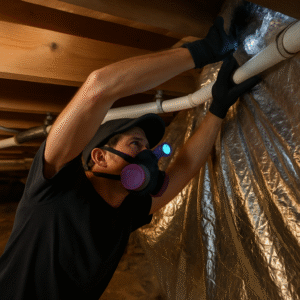
Step 1 — Free Under-Home Inspection
We check your vapor barrier, insulation, and moisture levels and explain exactly what’s going on under your home.
Step 2 — Clear Diagnosis & Upfront Quote
You’ll know the problem, the solution, and the price — with no surprises.
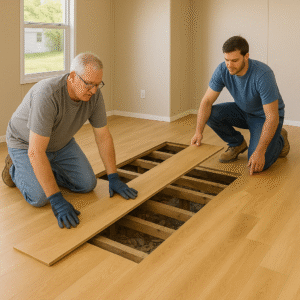
Step 3 — Professional Installation
We remove damaged material, seal the underbelly, and install a new vapor barrier built for Florida moisture.
Step 4 — Warranty & Support
Your installation includes a workmanship warranty and ongoing support from a Florida-based team.
Need more than a vapor barrier? We can help.
We repair every part of your mobile home — not just the vapor barrier.
- Hurricane Anchors / Tie Downs
- Mobile Home Flooring Installation
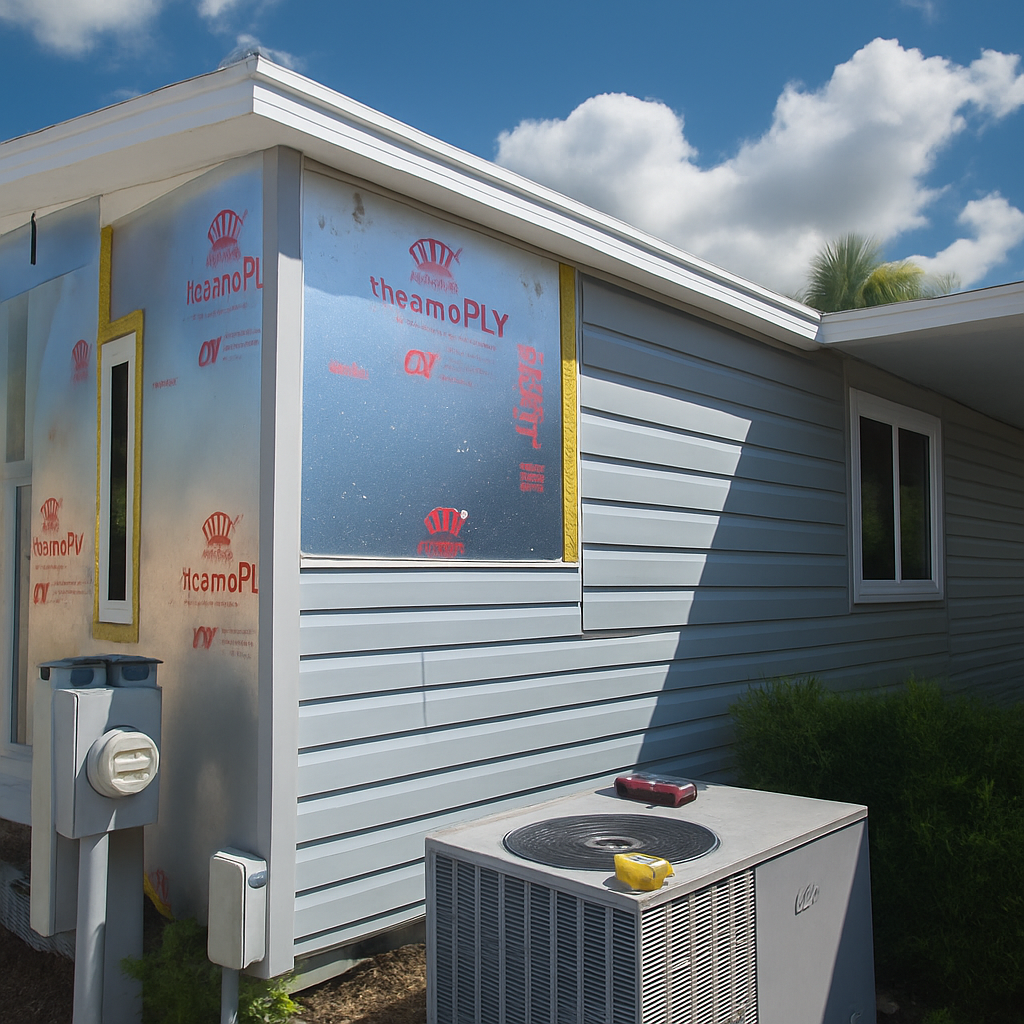
- Mobile Home Siding Installation
- Mobile Home Releveling Experts
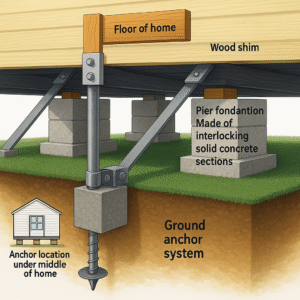
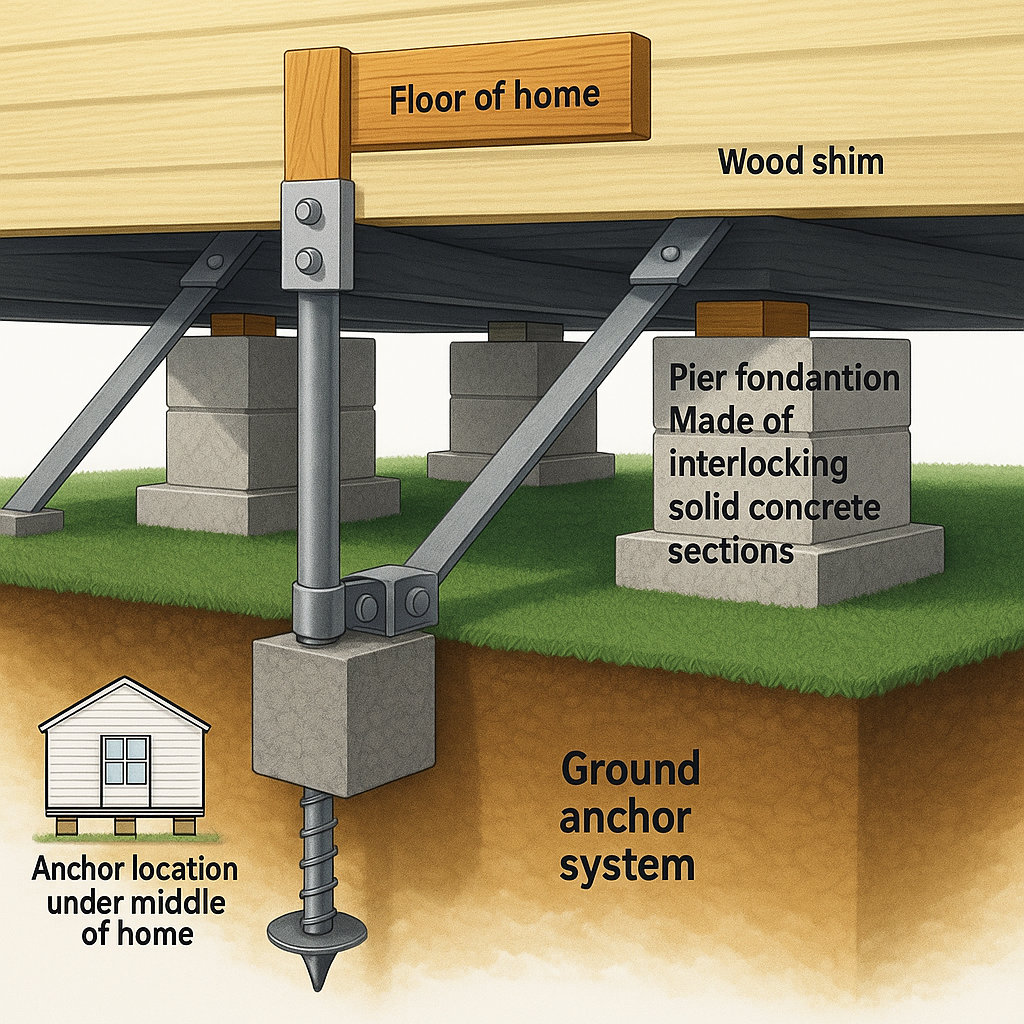
Mobile homes need proper hurricane anchors and tie downs to stay secure during high winds and storms in Florida. A weak or outdated tie-down system can allow shifting, movement, or structural stress that leads to costly damage. Professional installation helps stabilize the home, protect the foundation, and reduce storm risk. Many homeowners search for mobile home hurricane tie-down installation when they start noticing movement or settling — and that’s exactly what we provide.
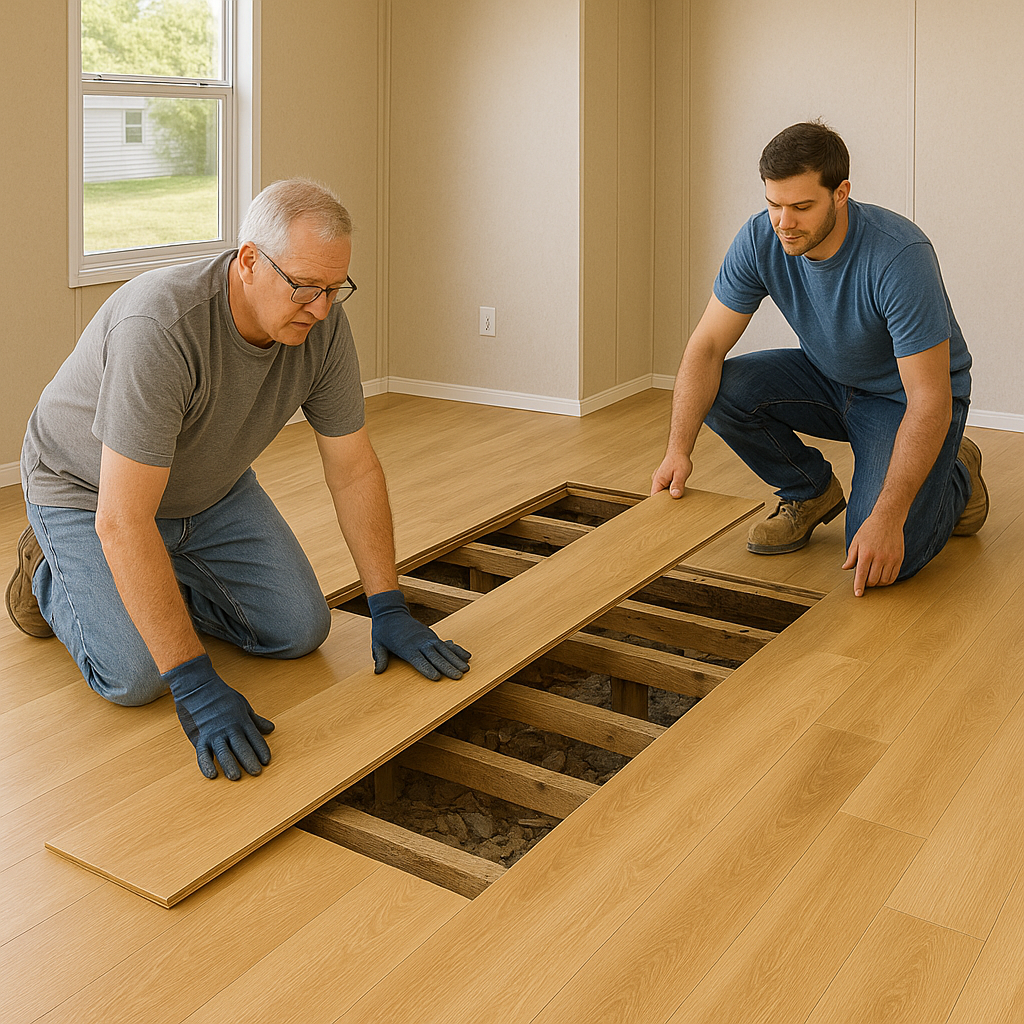
Moisture and underbelly damage often cause soft, sagging, or uneven floors in mobile homes. Installing new flooring helps restore stability, safety, and long-term support inside the home. We remove rotted or damaged materials and replace them with durable options designed for humid Florida conditions. Many people looking for mobile home flooring replacement are dealing with hidden moisture problems — and new floors are often part of the solution.
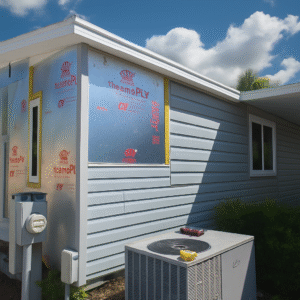
Damaged or aging siding can let water, humidity, and pests into a mobile home, leading to insulation damage and higher energy bills. Installing new siding helps protect the exterior and improve curb appeal while sealing out moisture. We remove loose, warped, or cracked siding and replace it with materials built for Florida heat and storms. Homeowners often search for mobile home siding installation and repair when they notice leaks or exterior damage starting to spread.
Over time, mobile homes can settle or shift, causing gaps, crooked doors, slanted floors, and cracks along the walls. Releveling restores the home to a safe, even position by correcting support issues under the structure. This helps prevent long-term stress and damage to the frame, flooring, and windows. Many homeowners turn to mobile home releveling services when they notice floors dipping or doors no longer closing properly.
- Mobile Home Vapor Barriers
- Mobile Home Sagging Floors Repairs
- Mobile Home Carport Contractors
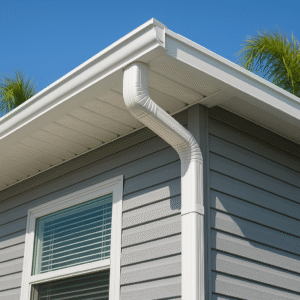
- Mobile Home Gutter Installation
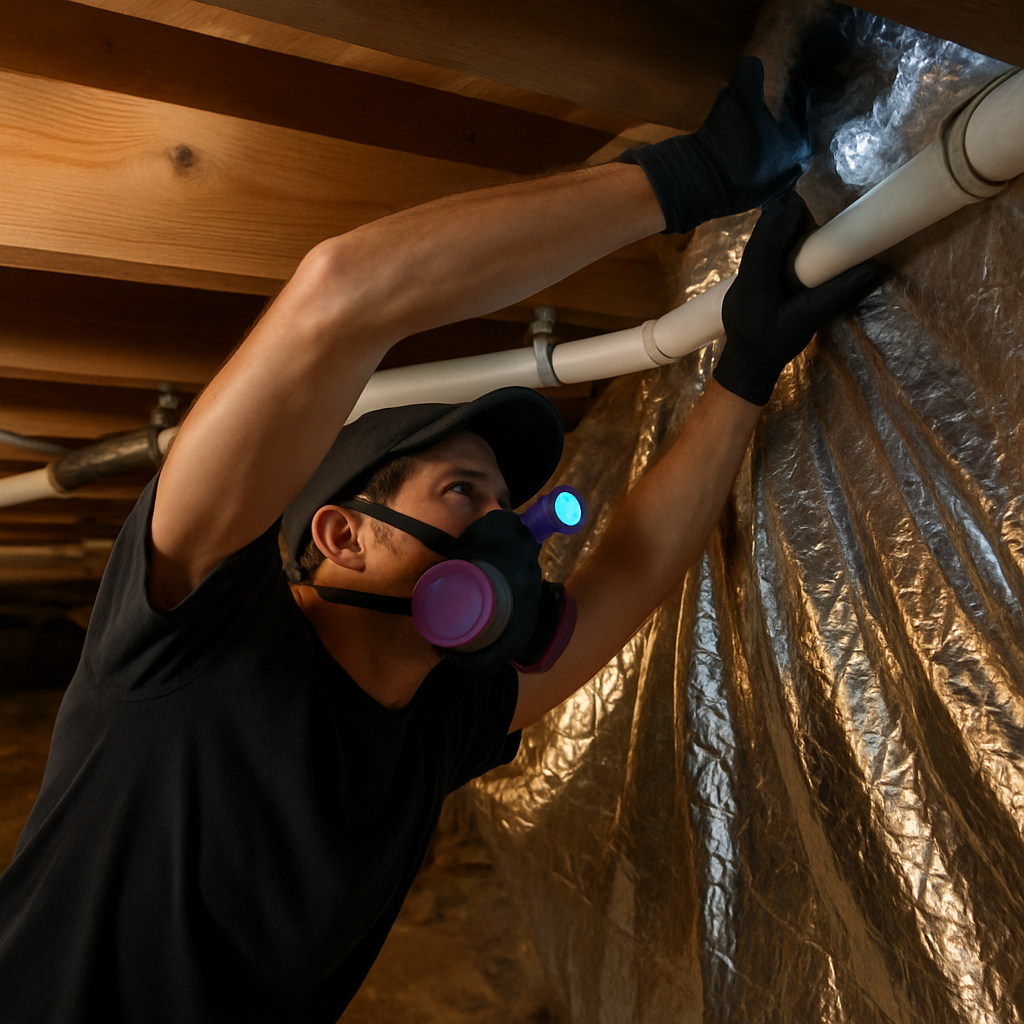
A torn or missing vapor barrier allows ground moisture to rise into the mobile home, leading to mold, soft floors, and insulation failure. Installing a new vapor barrier seals the underbelly and helps protect the structure from humidity and rot. This is one of the most important steps in preventing long-term damage in Florida’s climate. Homeowners researching mobile home vapor barrier replacement are often dealing with moisture, mildew smells, or sagging floors — all signs the barrier has failed.
Soft or sagging floors are a common sign of moisture damage under the home. We repair weakened joists and subflooring, remove damaged wood, and restore safe, solid support. Fixing sagging floors early helps prevent further structural issues and expensive repairs. Many people looking for mobile home sagging floor repair are also facing vapor barrier or underbelly problems — and we can address both.
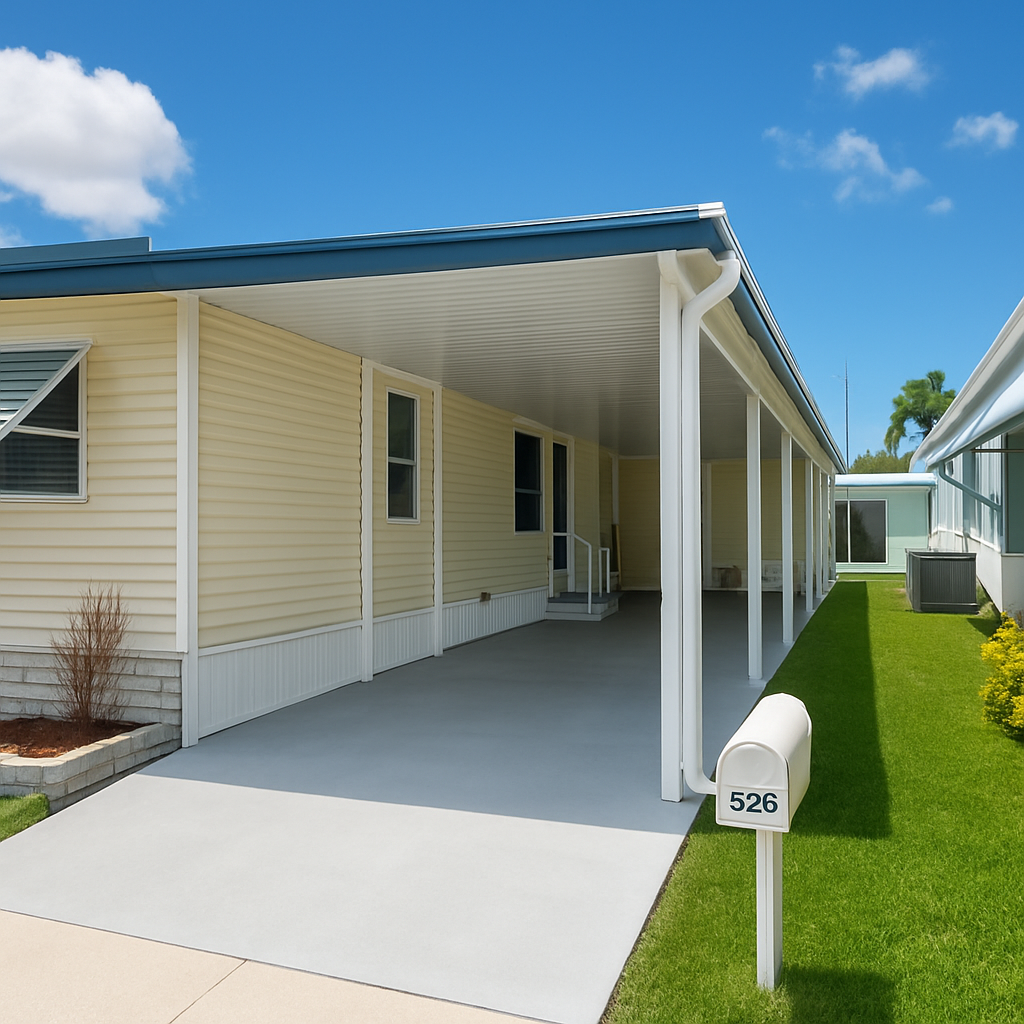
Carports help protect vehicles, entryways, and outdoor areas from sun, rain, and storm debris. We install and repair mobile home carports built for Florida weather and long-term durability. A new carport can improve convenience, safety, and property value. Homeowners searching for mobile home carport installation or replacement often want better protection during hurricane season or heavy storms.
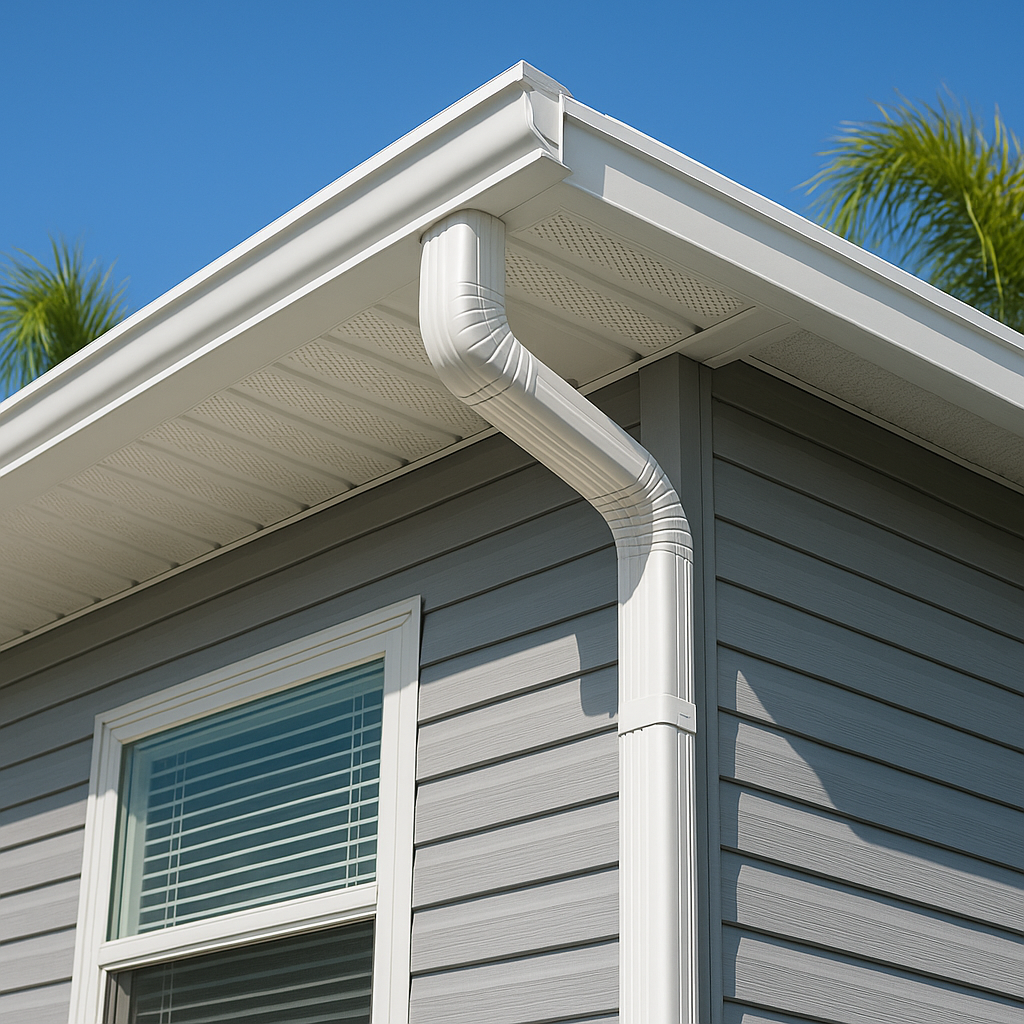
Without proper gutters, rainwater can pool around the home, causing erosion, moisture buildup, and underbelly damage. We install seamless gutter systems that direct water away from the structure to protect the foundation and vapor barrier. This helps reduce long-term maintenance issues and moisture-related repairs. Many homeowners look for mobile home gutter installation when they notice pooling water or moisture collecting under the home.
State Certified General Contractors CGC 004138 • Trusted by Local Homeowners
Why homes in Longboat Key Florida get Moisture Damage
Longboat Key’s barrier-island environment creates constant moisture pressure under mobile homes. The sandy, porous soil drains quickly but pulls humid, salt-filled air directly into the underside of the home—accelerating vapor barrier decay. Communities near Buttonwood Inlet Mobile Home Park and areas surrounding Gulfshore and the bayside corridors often experience torn vapor barriers, wet insulation, and mildew due to high winds, salt spray, and standing water after coastal storms. The combination of coastal humidity, storm surge potential, and persistent ground moisture makes early vapor barrier protection essential. Our team understands Longboat Key’s coastal challenges and provides specialized repairs designed to withstand island conditions.
1. How does Longboat Key’s salt air increase the need for a mobile home vapor barrier?
Longboat Key’s oceanfront air contains high salt and moisture levels that penetrate the soil and crawlspaces beneath mobile homes. This combination accelerates wood rot and mold growth if the underside of the home is not properly protected. A vapor barrier blocks moisture before it reaches insulation and subflooring. In coastal environments like Longboat Key, even small tears in the barrier can result in rapid deterioration. Preventing moisture intrusion also keeps indoor humidity levels more stable. Our vapor barrier systems are designed specifically for salt-heavy, high-humidity island climates.
2. What flooring problems are common in Longboat Key mobile homes exposed to coastal humidity?
Moisture from the Gulf often rises into the subfloor, causing it to soften, swell, or warp. Homeowners may first notice uneven walking surfaces or flooring that feels “spongy” in certain areas. Vinyl or laminate surfaces may begin separating at seams when the subfloor becomes saturated. Salt-laden humidity accelerates this process and can cause mildew odors to develop quickly. Addressing moisture at the subfloor level is essential to prevent structural damage. Our floor repair services are designed for homes exposed to coastal moisture cycles.
3. Why is a carport especially valuable for Longboat Key residents living close to the shoreline?
Coastal sun exposure is extremely intense on Longboat Key, causing paint, plastics, and vehicle interiors to degrade faster than inland. Salt spray also contributes to metal corrosion, even when vehicles are not driven on the beach. A carport protects cars, golf carts, and bikes from UV damage and salt exposure. It also provides shelter during sudden Gulf storms, reducing daily wear on outdoor equipment. Many residents use carports as shaded areas for unloading groceries or storing beach gear. Our carports are built to resist both sun and salt corrosion.
4. How do gutters help prevent coastal rainwater from damaging mobile homes on Longboat Key?
Gulf storms can produce heavy rainfall that overwhelms ground drainage around mobile homes. Without gutters, water flows directly toward the home’s foundation area, raising crawlspace humidity and washing away soil around support piers. Gutters redirect this water safely and prevent pooling that leads to mold growth. They also reduce saltwater staining on siding and skirting. Longboat Key homes benefit greatly from gutters due to frequent, fast-moving coastal downpours. Our systems are engineered to handle high-volume runoff typical of barrier islands.
5. Why do Longboat Key mobile homes require strong hurricane anchors despite being narrow, protected islands?
Barrier islands like Longboat Key experience some of Florida’s strongest storm winds due to lack of inland buffering. Mobile homes can shift, lift, or twist under these extreme wind conditions without proper anchoring. Hurricane anchors secure the home to the ground and reduce the risk of catastrophic movement. They also protect plumbing and electrical connections during wind events. State and local regulations strongly emphasize tie-down safety in coastal zones. Our anchor installations exceed Florida’s coastal wind-resistance requirements.
6. What are signs that shifting coastal soil is causing a Longboat Key mobile home to become unlevel?
Sandy soil on barrier islands shifts easily, especially after storms or king tides. Signs of settling include sloped floors, sticking windows, or doors that won’t stay shut. You may also see cracks in wall joints or cabinets pulling slightly away from walls. Homes can become uneven in just a single storm season due to rapid soil movement. Releveling restores structural balance and prevents long-term damage. Our releveling process is tailored to the unique soil behavior of barrier islands like Longboat Key.
7. How does salt exposure accelerate siding deterioration on Longboat Key mobile homes?
Salt spray settles on siding surfaces and breaks down protective coatings over time. This leads to pitting, peeling, and premature fading—especially on homes closest to the beach. Moisture from the Gulf then enters weakened siding seams and can cause mold or interior wall damage. Replacing worn siding protects against moisture, improves insulation, and restores curb appeal. Coastal-grade siding materials last significantly longer in salt air environments. We install siding that resists corrosion and holds up in Longboat Key’s harsh coastal climate.
8. How does a vapor barrier reduce crawlspace humidity in Longboat Key’s coastal environment?
Barrier islands naturally trap more moisture underground due to constant saltwater evaporation. This moisture rises into the crawlspace and creates high humidity levels that encourage mold and wood deterioration. A vapor barrier blocks this moisture and keeps the underside of the home dry. It also helps prevent condensation on pipes and ductwork. A drier crawlspace improves indoor air quality and reduces musty odors. Our vapor barrier systems are made for high-moisture coastal regions like Longboat Key.
9. What flooring issues appear when storm surge moisture reaches the subfloor of a mobile home?
During storm surges or high tides, moisture may travel farther inland than expected. When this moisture enters the crawlspace, it can quickly reach subfloor panels. Signs include sudden soft spots, warped surfaces, or flooring that buckles. You may also notice rapid mold growth due to the combination of heat and moisture. Immediate repair is essential in coastal environments to prevent widespread damage. We restore floors impacted by saltwater and storm-related moisture.
10. Why do Longboat Key residents often install carports to protect golf carts and beach gear?
Golf carts and beach gear are widely used on Longboat Key, but they deteriorate quickly in salt air. UV rays fade seats, crack plastics, and degrade batteries. A carport shields equipment from both sun and salt spray, significantly extending its lifespan. It also protects items during afternoon thunderstorms common along the Gulf. Many residents also use carports as organized storage for fishing gear, coolers, and kayaks. Our carports are built from materials that resist salt corrosion.
11. How do gutters prevent moisture problems that often occur under coastal mobile homes?
Wind-driven rain on Longboat Key can blow water under the home, soaking soil and raising humidity. Gutters redirect rainfall away from the perimeter, reducing moisture entering the crawlspace. This prevents mold, rot, and mosquito activity that thrive under damp homes. Gutters also help protect landscaping that may otherwise erode from heavy runoff. Proper drainage is essential in a coastal environment where soil dries slowly. Our gutter systems minimize these risks effectively.
12. How do hurricane tie-downs improve safety for mobile homes exposed to Gulf storms?
Hurricane tie-downs reinforce the mobile home’s frame by distributing storm-force wind loads into ground anchors. On Longboat Key, these winds often arrive with little inland friction to slow them down. Tie-downs reduce the risk of the home shifting or lifting during storms. They also help maintain roof integrity by stabilizing the base structure. Regular inspections are essential due to shifting coastal soil. Our tie-down systems are engineered to handle Gulf wind patterns and storm surges.
13. What causes Longboat Key mobile homes to settle unevenly even without obvious storms?
Coastal soils shift more frequently due to tidal movement, fluctuating water tables, and natural sand migration. Even small changes can cause one corner of the home to settle faster than another. Signs include leaning furniture, cracked trim, or gaps in flooring transitions. These issues become more noticeable over time if not corrected. Releveling stabilizes the home and prevents frame distortion. We specialize in correcting coastal settling patterns.
14. Why does siding on Longboat Key mobile homes often show algae growth more quickly than inland homes?
Warm Gulf breezes carry moisture and organic material that cling to siding. When sunlight warms the panels, algae and mildew thrive on damp surfaces. This is especially common on shaded walls or homes near vegetation. While cleaning helps temporarily, weakened siding absorbs more moisture over time. Upgrading siding reduces algae growth and strengthens weather protection. Our siding options are ideal for the wet, salt-rich conditions of Longboat Key.
15. How does a vapor barrier help maintain indoor comfort during Longboat Key’s hottest months?
Ground moisture raises indoor humidity, making the AC run harder to maintain cool temperatures. A vapor barrier stops this moisture from entering the underside of the home. Lower humidity helps the home stay cooler and reduces energy consumption. It also protects insulation and ductwork from absorbing moisture. Many Longboat Key homeowners notice a more stable indoor temperature after installation. Our vapor barriers enhance efficiency during Florida’s hottest coastal months.
16. What flooring problems can appear when saltwater exposure reaches subfloor materials?
Saltwater accelerates deterioration by breaking down wood fibers and adhesives faster than freshwater. Floors may sag, warp, or develop soft spots soon after exposure. You may also notice white or powdery residue, a sign of salt deposits. Early intervention is crucial to prevent structural weakening. Replacing damaged subfloor materials quickly prevents spread to adjacent rooms. Our team specializes in restoring subfloors exposed to coastal water conditions.
17. Why do Longboat Key homeowners install carports to protect bicycles, kayaks, and surf gear?
Outdoor recreation is common on Longboat Key, but salt air deteriorates equipment rapidly. A carport shields gear from corrosion, fading, and cracking caused by constant sun and salt spray. It also keeps equipment dry during summer downpours. Protected storage reduces long-term replacement costs. Carports provide convenient shaded space for cleaning, repairing, and organizing outdoor gear. We design carports suited for active coastal lifestyles.
18. How do gutters help protect mobile homes built near dunes or sandy areas on Longboat Key?
Homes near dunes often experience blowing sand that accumulates around the foundation. When mixed with water runoff, sand traps moisture against skirting and support piers. Gutters move water away so sand remains dry and less compacted. This prevents erosion and moisture pooling under the home. It also reduces insect activity that thrives in damp sand. Our gutter systems are built to handle coastal wind and rain patterns.
19. What are early warning signs that hurricane anchors need inspection on a coastal mobile home?
If skirting shifts after storms or the home vibrates more during windy days, anchors may have loosened. Corrosion from salt air can also weaken straps and metal components. Soil movement from tides or heavy rain may reduce anchor tension. Regular inspections ensure the home remains stable during storm season. Catching issues early prevents major structural risks. Our anchor inspections focus on coastal-wear vulnerabilities.
20. How does releveling extend the lifespan of a mobile home on Longboat Key’s shifting island ground?
Releveling redistributes weight evenly across piers, reducing stress on the frame in shifting sandy soil. This prevents cracks, leaks, and structural distortions that develop over time. It also helps doors and windows close properly, improving energy efficiency. Coastal soil shifts more frequently than inland soil, making regular releveling essential. Homes that stay level last longer and experience fewer internal repairs. Our releveling service is tailored to the movement patterns of barrier island foundations.
Contact Florida Anchor and Barrier today to ensure your mobile home is protected with a quality vapor barrier.
Florida Anchor And Barrier
Call to find out if we service your city!
800.681.3772
Service Zone: Altamonte Springs, Apollo Beach, Arcadia, Belleview, Bradenton, Brooksville, Cape Coral, Clearwater, Clermont, Coral Springs, Crystal River, Dade City, Daytona Beach, Deland, Deltona, Dunedin, Englewood, Ellenton, Eustis, Fort Lauderdale, Fort Myers, Fruitville, Hialeah, Hollywood, Homosassa, Inverness, Kissimmee, Lakeland, Largo, Leesburg, Lakewood Ranch, Longboat Key, North Port, New Port Richey, Ocala, Oldsmar, Orlando, Palm Harbor, Palmetto, Parrish, Pinellas Park, Plant City, Port Charlotte, Port St. Lucie, Punta Gorda, Riverview, Ruskin, Safety Harbor, Sanford, Sarasota, Sebastian, Seminole, St. Augustine, St. Cloud, St. Petersburg, Tavares, Tampa, Tarpon Springs, Venice, Winter Haven, Winter Park, Zephyrhills
HEAD OFFICE: 11590 US Hwy 19 N Clearwater, FL 33764